
Despite the strong vendor marketing and promises of seamless automation, the journey from a live AI agent to measurable business value is proving more complicated than many organisations initially expected.
In most cases, the holdup is not the AI model itself.
Telecom companies already have access to increasingly capable platforms and models. The harder, and usually slower part, comes from fragmented data architectures that have accumulated over years of operational growth and system layering.
Telecom operators today are under considerable commercial pressure. Years of investment in 5G infrastructure and digital transformation programs have not always translated into the expected financial returns. Traditional revenue streams such as voice and SMS continue to decline, while subscriber growth in mature markets has slowed considerably.
At the same time, hyperscalers, software platforms, and digital service providers continue capturing a growing share of the value generated on telecom networks. The Salesforce 2024 State of Telecom report reflects this reality clearly. Many operators are still focused on protecting existing revenue rather than creating entirely new growth models.
That context matters because AI is now viewed as a necessary operational capability. The discussion has shifted. The question is less about whether to invest in AI and more about how to generate measurable operational value from it without creating additional complexity.
Unpacking the Business Case for Agentic AI in Telecom
In February 2026, Salesforce launched Agentforce for Communications, a vertical AI offering designed specifically for telecom organisations. The platform introduced five prebuilt AI agents focused on operational areas where telecom operators traditionally experience inefficiencies, especially around customer service, billing disputes, and complex B2B sales processes.
Some of these challenges are not new. In fact, many telecom operators have spent years trying to reduce manual operational overhead in these exact areas.
The agents themselves are designed around targeted operational use cases:
- Billing Resolution Agent: consolidates information from disconnected billing systems to help resolve customer disputes with less manual intervention.
- SLO (Service Level Objective) Insights Agent: monitors network performance against SLA thresholds and identifies potential issues earlier in the operational lifecycle.
- Quoting Agent: simplifies complex B2B quoting activities, reducing dependency on specialised configuration teams.
- Site Grouping Agent: supports the administration of multi-site enterprise contracts.
- Guided Selling Agent: provides contextual recommendations to field technicians during customer interactions.
Not every operator will prioritise the same use cases, of course, but the broader direction is clear.
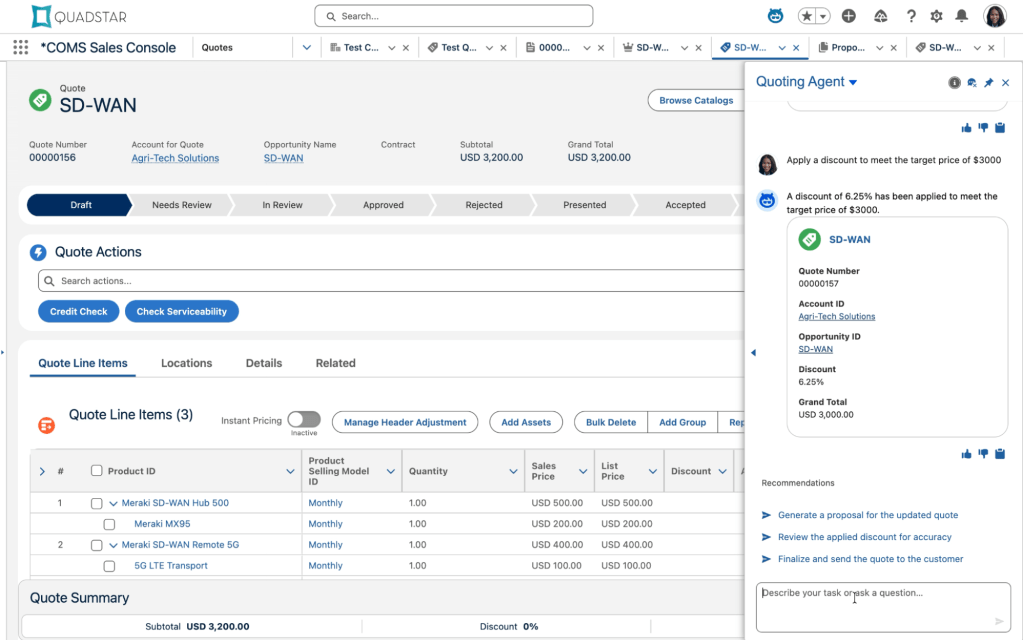
Figure 1 – Quoting Agent
Data Readiness is the Essential Prerequisite
For telecom companies, the underlying problem is largely structural. Customer information is often distributed across multiple CRM platforms, legacy BSS/OSS environments, field service systems, and support channels. Each platform usually operates with its own synchronisation logic, update cycle, and data model.
The result is operational inconsistency. A customer address may be updated in the billing platform while remaining outdated in the CRM. A customer’s fibre installation status may show as completed in the provisioning platform, pending in the CRM and cancelled in the field service application. These situations are more common than many organisations would like to admit.
AI systems don’t eliminate these inconsistencies. If anything, they tend to expose them more quickly because the systems operate at greater speed and scale.
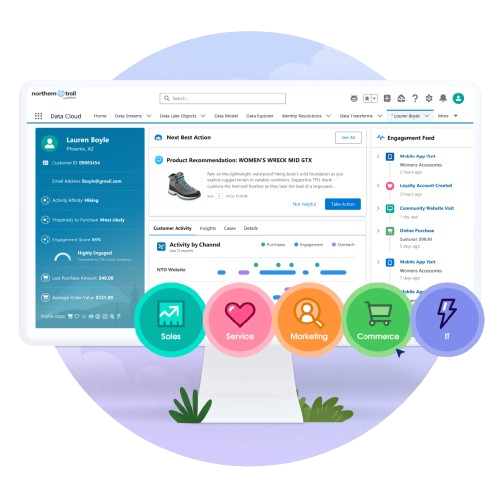
Figure 2 – A unified customer profile enables trusted AI-powered customer interactions
Before deploying AI agents into production environments, organisations should conduct a realistic assessment across several foundational dimensions of their data architecture. First, they should evaluate unification to determine whether AI agents can reliably access the required data across systems. Harmonisation is equally important, ensuring that data definitions remain consistent throughout the organisation.
Salesforce has, to their credit, been remarkably candid about it. Their internal data reveals sobering statistics:
A mere 15% of companies currently possess a unified view of customer data robust enough to genuinely support AI decision-making at scale.
This finding is frequently referenced by Salesforce, which casts an even sharper light on the problem. Their research indicates that fewer than 20% of enterprises genuinely believe they are data-ready for AI, and only 9% have completed the foundational integration work necessary to operate these advanced systems effectively.
Data currency also matters more than teams sometimes expect. AI-driven workflows become unreliable quite quickly when underlying operational data is outdated or incomplete. Governance frameworks and access controls should also be established before deployment rather than after operational issues begin appearing.
Understanding where your organisation stands on the AI maturity curve is an important starting point before any investment decision.
A useful way to frame this is across four levels of organisational readiness, as stated on Stellaxius’ AI Readiness Assessment framework:
- AI Aware: adoption is fragmented and largely experimental.
- AI Ready: an initial strategy is defined, and foundational governance is beginning to take shape.
- AI Embedded: AI capabilities are operationalised at scale and actively augmenting decision-making.
- AI-Driven: AI is at the core of the operating model and agentic capabilities are in production.
Most telecom operators today find themselves somewhere between AI Aware and AI Ready, with data fragmentation as the primary constraint preventing the step up.
From Reactive BSS to Intelligent Operations
The impact of agentic AI extends beyond traditional CRM environments. In March 2026, TM Forum Inform published a compelling analysis on the role of agentic AI within telecom Business Support Systems (BSS). The analysis highlighted that many operators continue relying on BSS environments that were originally designed to record operational activity rather than autonomously respond to it.
That distinction may sound subtle, but operationally it changes quite a lot. Instead of relying entirely on human operators to interpret events and trigger workflows, AI agents can evaluate operational conditions, identify possible actions, and execute tasks across commercial and service processes. In practice, this changes how telecom operations are managed day-to-day.
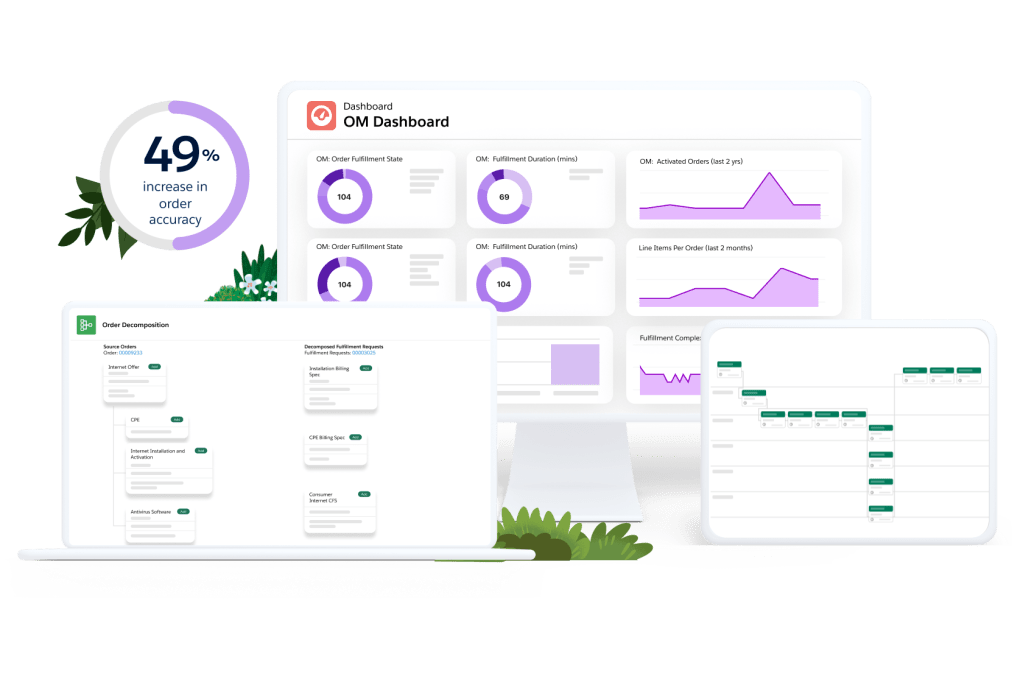
Figure 3 – Salesforce Communications Cloud – Order management & intelligent BSS monitoring
Billing agents can identify revenue leakage earlier in the billing cycle. Retention agents can detect churn indicators based on customer behaviour patterns and trigger targeted retention activities. Quoting agents reduce manual effort within complex B2B sales processes, while guided selling capabilities can support revenue generation during field service visits.
TM Forum also emphasised that organisations do not necessarily need to launch large-scale transformation programs before seeing results. In fact, operators reporting stronger outcomes often start with smaller and more focused use cases, such as customer care automation or order triage. That phased approach appears to be important. Initial deployments allow teams to validate data quality, establish governance processes, and build operational confidence before expanding AI capabilities more broadly across the organization.
Strategic Priorities for IT Leadership
For IT managers and business leaders planning Salesforce Communications Cloud implementations or migrations, success will probably depend on a few foundational priorities.
First, organisations should assess data readiness before introducing AI agents into operational workflows. Teams should identify data quality issues, missing records, and integration gaps across all systems expected to support AI capabilities. Addressing these issues proactively is considerably easier than resolving them after production deployment.
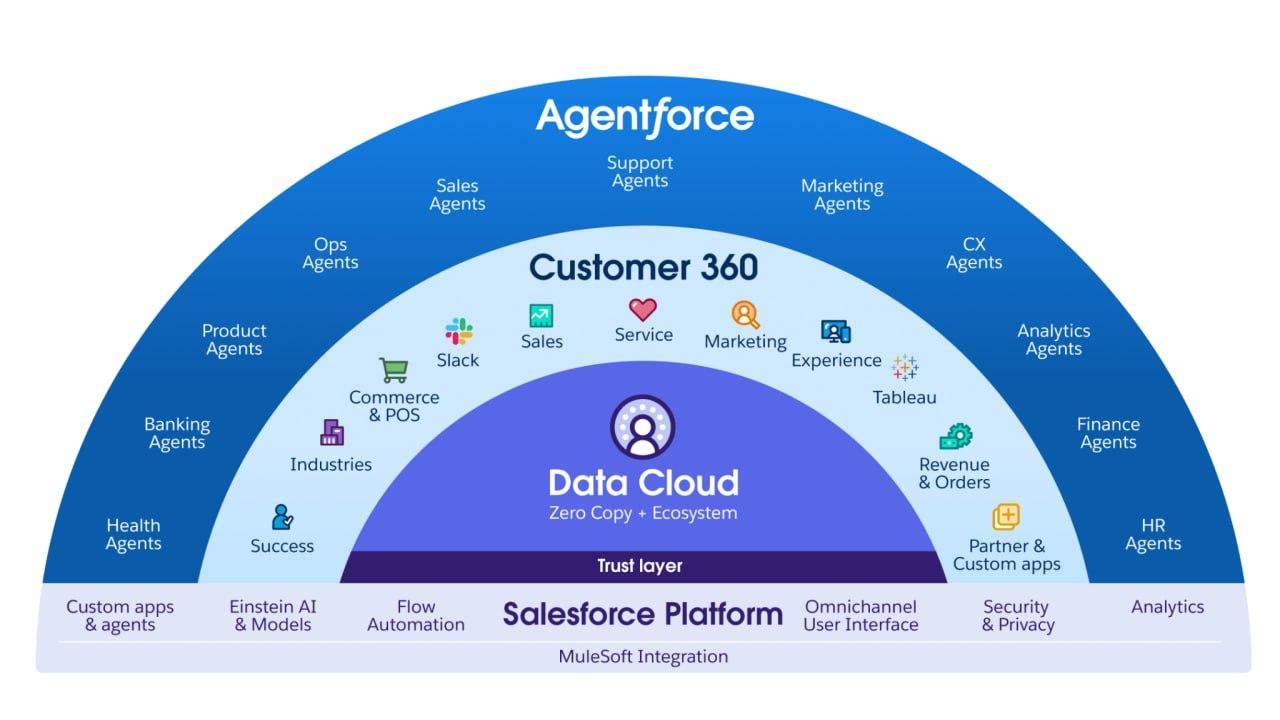
Second, investment in Salesforce Data 360 (formerly Data Cloud) should be treated as foundational infrastructure rather than a future enhancement phase. Salesforce Data 360 provides the unified data layer required to connect CRM, BSS, OSS, and operational systems into a single environment capable of supporting AI-driven workflows in real time.
Finally, governance frameworks should be established early in the program lifecycle. Access controls, data classification standards, and AI monitoring processes are not simply compliance requirements. They become operational necessities once AI agents begin interacting with multiple systems and customer-facing processes.
The commercial opportunity for AI within the telecommunications sector is significant, and the underlying platform capabilities are already available. However, organisations achieving the strongest results are generally the ones that started with a more realistic assessment of their operational readiness and data maturity. AI agents will ultimately operate according to the quality and consistency of the data made available to them. In well-governed environments, that can create meaningful operational advantages. In fragmented environments, it often accelerates operational inefficiencies that already existed in the first place.
For organisations seeking guidance in these areas, partners such as Stellaxius can support initiatives related to:
- AI Readiness Assessment: a structured evaluation across strategy, data, technology, processes, people, and governance that identifies gaps and prioritises opportunities before any AI investment is committed.
- Data Assets Valuation Strategy
- AI Advisory & Enablement, including end-to-end support for Agentforce strategy and implementation within the Salesforce ecosystem.
Contact Stellaxius today for expert guidance on CRM & Digital Transformation Strategy and bespoke solutions tailored to your unique challenges.

With over two decades of experience in corporate marketing, sales, and Salesforce consultancy, I'm passionate about streamlining sales processes, boosting efficiency, and driving growth. I love being part of a team and am always excited to tackle new projects and challenges.